
Quick Relief: Immediate Steps for Financial Pressure


When financial pressure is acute, speed matters. Here are the steps that provide the most relief in the shortest time.

Find Real Relief  ·  Free Tools  ·  No Obligation

Discover Relief Options Available to You

The Speed Advantage

In financial difficulty, the value of acting quickly is significant. Every day that a utility account goes unaddressed moves it closer to shutoff. Every day that a past-due bill goes uncontacted accumulates additional fees and damages credit. Every day that available assistance programs go unapplied delays the relief they provide. Speed — not urgency or panic, but deliberate and prompt action — is consistently associated with better financial crisis outcomes.

The 24-Hour Relief Actions

These actions can be completed within 24 hours and provide direct, immediate benefit:

  1. Call 211 and ask about assistance programs for your most pressing financial need
  2. Call your utility company and ask what assistance programs are available
  3. Review one month of bank statements and cancel any unused recurring charges
  4. Call your highest-interest creditor and ask about hardship programs
  5. Check your eligibility for SNAP at snap.fns.usda.gov

None of these require perfect circumstances, advance planning, or significant time. Each produces either direct assistance access or immediate cost reduction. Completing all five within 24 hours produces meaningful financial relief in most situations.

The Fastest Single Action: Call 211 right now. This call costs nothing, takes 10 to 20 minutes, and connects you to a trained specialist who can identify every assistance resource available in your area for your specific situation. It is the highest-return financial action available to someone in financial difficulty who has not already made this call.

The Week-One Relief Plan

Within the first week of addressing financial pressure, the most valuable actions are: completing the 24-hour steps above, gathering financial documents (account statements, bills, income documentation) to enable assistance applications, and submitting at least one assistance program application for the most pressing need. This week-one plan converts awareness of available resources into actual applications in progress.

Find More Relief Options

Disclosure: This site may receive compensation when you click on links or complete offers through our partners. Content is for informational purposes only and does not constitute financial advice.


When Your Income Does Not Cover Your Expenses


A persistent gap between income and expenses is a real financial challenge that requires real solutions. Here is how to address it.

Find Real Relief  ·  Free Tools  ·  No Obligation

Discover Relief Options Available to You

The Deficit Situation

A household whose income consistently falls short of expenses is in a structurally challenging position that requires structural solutions — not just spending reduction. Spending can only be reduced to the level of essential needs; below that floor, the deficit cannot be resolved through spending cuts alone. When income genuinely does not cover essential expenses, addressing the gap requires either increasing income, reducing the cost of essentials through available assistance programs, or both simultaneously.

Addressing the Essentials First

The first response to an income-expense deficit is to ensure that the expense side includes all available assistance programs. A household that qualifies for SNAP, utility assistance, childcare assistance, or other programs but is not using them is carrying higher expense obligations than its actual situation requires. The fully assisted budget — where all applicable programs are utilized — may close the gap significantly, or may reveal a smaller gap that is addressable through other means.

Deficit Management Priority: (1) Identify all assistance programs available to reduce essential expenses. (2) Address high-cost obligations (insurance, unused subscriptions) that can be reduced. (3) Explore income supplementation options. (4) If deficit persists, contact nonprofit credit counseling for personalized guidance.

Income Supplementation

Supplementing primary income — through additional hours, a second job, a marketable skill applied to side work, or other means — addresses the income side of the gap. This approach requires time and energy that may be limited, particularly for households already under significant financial stress. But even modest supplementation — $100 to $200 per month from side income — can close a significant gap. The question is which specific income supplementation options are realistic for your situation and available time.

Nonprofit Credit Counseling

When income-expense deficits are persistent and complex, nonprofit credit counseling provides professional assessment and planning at no or minimal cost. A certified financial counselor can identify options you may have missed, create a comprehensive plan that accounts for your specific situation, and provide the ongoing support that makes sustained improvement more likely.

Find More Relief Options

Disclosure: This site may receive compensation when you click on links or complete offers through our partners. Content is for informational purposes only and does not constitute financial advice.

The Relief Finder’s Guide to Monthly Budget Categories


Every budget category has relief available somewhere. Here is a category-by-category guide to finding it.

Find Real Relief  ·  Free Tools  ·  No Obligation

Discover Relief Options Available to You

Category-by-Category Relief

Budget relief is most efficiently found when searched for systematically by category rather than approached as a general goal. Each major spending category has specific relief mechanisms — assistance programs, negotiation opportunities, efficiency improvements, and strategic changes — that apply specifically to that category. Here is a category-by-category guide to finding available relief.

Housing (Rent or Mortgage)

For renters: emergency rental assistance programs (call 211), housing counseling through HUD-approved agencies, local nonprofit housing assistance funds. For homeowners: mortgage forbearance programs through servicers, homeowners assistance funds (HAF) at the state level, housing counseling through HUD-approved agencies, and refinancing options when rates make it financially advantageous.

Utilities (Electric, Gas, Water)

LIHEAP federal assistance. Utility company hardship programs. Weatherization through WAP. Budget billing to smooth peaks. Rate plan optimization with your utility. 211 for local supplemental programs. Low-income rate programs offered in many states.

Food

Food bank access (no eligibility requirements). SNAP for ongoing assistance. WIC for eligible families. Senior meal programs. School meal programs for eligible children. Community meals. Free summer meals for children during school breaks.

The Relief Finder’s Rule: For any expense category that is causing financial pressure, the first action is to search specifically for assistance programs and relief mechanisms that apply to that category. Relief is almost always available somewhere — the challenge is finding it, not accessing it.

Healthcare

Medicaid (check eligibility at healthcare.gov). Hospital financial assistance programs (ask billing department). Patient assistance programs for prescriptions (NeedyMeds.org). GoodRx for prescription discounts. Community health centers (sliding scale fees). State pharmaceutical assistance programs for eligible populations.

Find More Relief Options

Disclosure: This site may receive compensation when you click on links or complete offers through our partners. Content is for informational purposes only and does not constitute financial advice.

Food Cost Relief: Stretching Further and Finding More


Food costs create ongoing pressure for millions of households. Here are both the community resources and the practical strategies that provide real relief.

Find Real Relief  ·  Free Tools  ·  No Obligation

Discover Relief Options Available to You

The Food Cost Relief Dual Approach

Food cost relief comes from two directions simultaneously: community resources that provide direct food assistance, and personal strategies that reduce what food costs from the household budget. Both approaches have meaningful impact, and they reinforce each other — using food assistance resources frees household budget for other expenses, while spending the remaining food budget efficiently maximizes the overall impact.

Food Bank Access: No Barrier Required

The food bank network — Feeding America’s 200 regional food banks and approximately 60,000 affiliated food pantries — provides free food assistance to anyone in need without income verification, documentation requirements, or proof of qualifying circumstance. You do not need to be at a specific poverty level, you do not need documentation, and you do not need to explain your situation. If you need food, food banks exist for you. Find your nearest food bank at feedingamerica.org/find-your-local-foodbank.

SNAP: The Ongoing Food Relief Program

SNAP (Supplemental Nutrition Assistance Program) provides monthly electronic benefits redeemable for most grocery purchases at authorized retailers. Eligibility is based on household size and income — many working households with limited incomes qualify. Applying is worth doing even if you are unsure of eligibility: applying costs nothing, and the benefit if approved can be substantial.

Food Budget Stretching Basics: Meal plan before shopping to eliminate waste and impulse buys. Use store brands (typically 20–30% cheaper than name brands for identical quality). Shop with a list and stick to it. Buy proteins in bulk and freeze. Dried beans, lentils, eggs, and whole grains provide exceptional nutrition-to-cost ratios.

WIC for Eligible Families

Women, Infants, and Children (WIC) provides specific food benefits, nutrition counseling, and healthcare referrals for pregnant women, new mothers, and children under 5 who meet income guidelines. WIC benefits supplement the general food budget for qualifying families with young children and may include substantial monthly food benefits for formula, fruits, vegetables, grains, dairy, and other specific food items.

Find More Relief Options

Disclosure: This site may receive compensation when you click on links or complete offers through our partners. Content is for informational purposes only and does not constitute financial advice.

Utility Bill Relief: Every Program Available


Utility bills are one of the most common sources of financial pressure — and one of the areas with the most available relief. Here is every program.

Find Real Relief  ·  Free Tools  ·  No Obligation

Discover Relief Options Available to You

LIHEAP: The Federal Utility Assistance Program

The Low Income Home Energy Assistance Program provides federally funded utility bill assistance administered by states. LIHEAP helps qualifying households pay for heating costs in winter, cooling costs in summer, and in some states, provides year-round energy cost assistance. Income eligibility is typically up to 150 percent of the federal poverty level, though some states set higher thresholds. Applications are processed through state or local administering agencies — contact your state’s LIHEAP office or call 211 to identify the program in your area.

Utility Company Assistance Programs

Most utilities maintain their own hardship programs independent of LIHEAP. These programs vary by utility but commonly include: payment arrangements for past-due balances, forgiveness of late fees during hardship periods, direct financial assistance funded by ratepayer and corporate contributions, budget billing that smooths seasonal cost spikes, and energy efficiency assistance that reduces ongoing costs. None of these are automatic — they require a call to your utility to ask what is available and to request application materials.

Utility Relief Script: Call your utility and say: “I am experiencing financial difficulty and I am having trouble paying my bill. What assistance programs do you have available, and what is the process to apply?” Write down the programs mentioned and follow up on each one.

Weatherization Programs

The Weatherization Assistance Program (WAP) — federally funded through the Department of Energy — provides free energy efficiency improvements to qualifying low-income households. These improvements — insulation, air sealing, HVAC tune-ups, and other measures — permanently reduce energy consumption, providing ongoing monthly bill relief for as long as the household lives there. Contact your local Community Action Agency to determine eligibility and availability.

Water Assistance Programs

Water and sewer assistance is less consistently available than energy assistance, but programs do exist in many areas through utility-operated hardship funds, state programs, and community organizations. Contact your water utility directly to ask about available assistance, and check with 211 for any local supplemental programs.

Find More Relief Options

Disclosure: This site may receive compensation when you click on links or complete offers through our partners. Content is for informational purposes only and does not constitute financial advice.

Relief for Renters: Finding Housing Help When Rent Is a Struggle


Rent pressure affects millions. The assistance landscape for renters is more robust than most people realize — here is how to access it.

Find Real Relief  ·  Free Tools  ·  No Obligation

Discover Relief Options Available to You

The Renter’s Relief Landscape

Renters under housing cost pressure have access to a range of assistance programs that can provide meaningful relief — from emergency rental assistance that prevents eviction to longer-term housing subsidy programs that reduce ongoing rent costs. The challenge is that this landscape is fragmented: programs vary by state, county, and city; funding levels change; eligibility criteria differ. Knowing where to look and how to navigate the system efficiently is what makes the difference between finding help and concluding it does not exist.

Emergency Rental Assistance

Emergency rental assistance programs — funded federally but administered at the state and local level — provide direct payment to landlords on behalf of tenants who are behind on rent due to financial hardship. These programs have been significantly funded in recent years and continue operating in many jurisdictions. Eligibility typically requires demonstrated financial hardship, documentation of tenancy, and income within program thresholds. Contact your local Community Action Agency or Housing Authority, or call 211, to identify currently funded programs in your area.

Renter Action Steps:

  1. If behind on rent, contact landlord proactively before any legal action begins
  2. Call 211 to identify emergency rental assistance programs in your area
  3. Contact your local Community Action Agency for additional resources
  4. Contact a HUD-approved housing counselor for guidance on your options

Utility Assistance for Renters

Many renters have utility costs that are separately billed — water, electricity, gas. LIHEAP utility assistance and utility company hardship programs are available to renters as well as homeowners. If utility costs are a significant component of housing cost pressure, addressing them through available assistance programs can provide meaningful overall housing cost relief.

Longer-Term Housing Relief

For renters whose housing costs chronically exceed what their income can sustainably support, longer-term solutions may be more appropriate than emergency assistance. Housing counseling can help identify whether a housing voucher program waitlist, a move to a more affordable area, or other structural changes would provide more lasting relief than repeated emergency interventions.

Find More Relief Options

Disclosure: This site may receive compensation when you click on links or complete offers through our partners. Content is for informational purposes only and does not constitute financial advice.
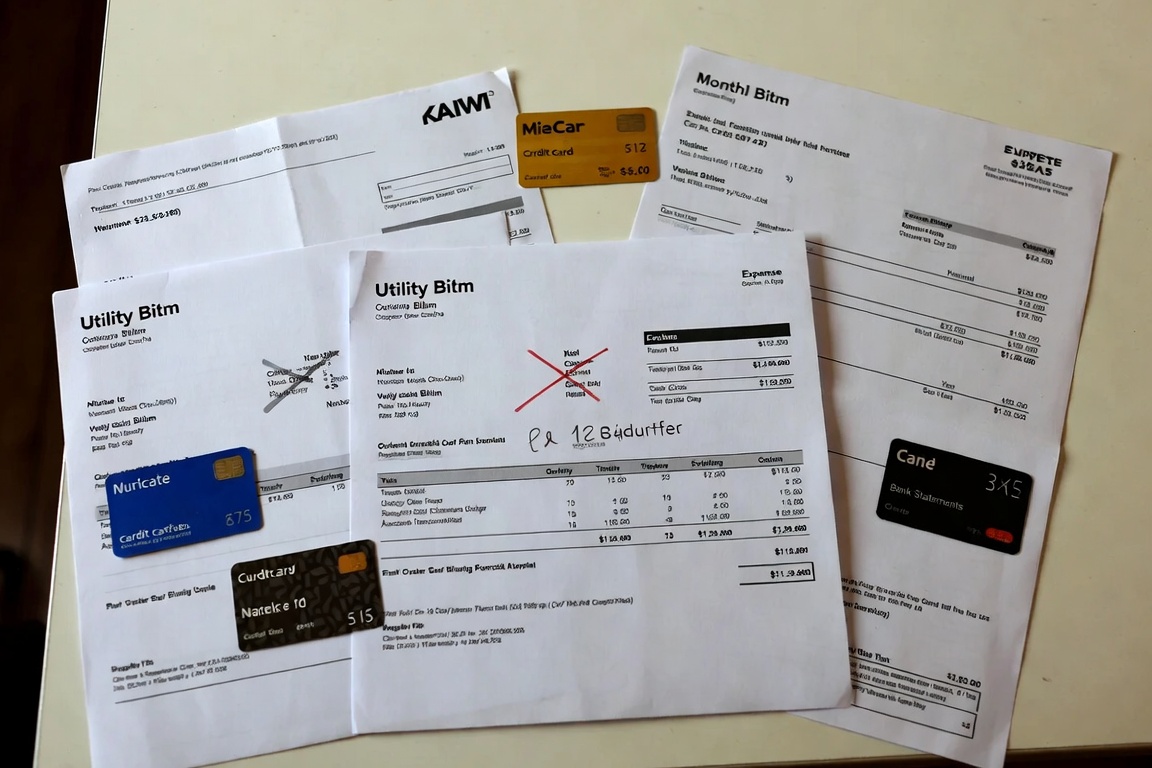
The Stress Behind the Debt: Addressing Financial Anxiety


The psychological weight of financial stress is as real as the financial facts behind it. Addressing both — the money and the anxiety — produces the most complete relief.

Find Real Relief  ·  Free Tools  ·  No Obligation

Discover Relief Options Available to You

Financial Stress Is a Health Issue

Research consistently finds that financial stress is associated with measurable physical and mental health impacts: elevated cortisol levels, disrupted sleep, reduced cognitive performance, higher rates of depression and anxiety, and worse decision-making. This is not metaphorical. Financial stress has real physiological effects that compound the practical challenges of managing money under pressure.

Addressing financial anxiety is not separate from addressing financial challenges — it is an integral part of the process. Managing the stress enables better financial thinking, which produces better financial decisions, which reduces the conditions that create stress. The intervention that starts this virtuous cycle can be either practical (improving the financial situation) or psychological (improving the relationship with the financial situation). Both work, and both reinforce each other.

The Anxiety-Avoidance Loop

Financial anxiety characteristically produces avoidance behavior: not opening mail, not checking account balances, not thinking about the financial situation. This avoidance temporarily reduces the discomfort of anxiety while allowing the underlying situation to worsen — which eventually produces worse anxiety. Breaking this loop is the first step toward financial relief. The counter-intuitive insight: looking directly at the financial situation, even when it is difficult, typically reduces anxiety rather than increasing it — because the uncertainty that fuels catastrophic thinking is replaced by actual information, which is almost always more manageable than the feared worst case.

Anxiety Reduction Practice: Set aside 20 minutes to look at your current financial position with fresh eyes. Current account balance. Bills coming due. What is manageable, what is not. This deliberate assessment replaces formless dread with specific, addressable information. Specific problems have specific solutions. Formless dread does not.

Talking About It

Financial stress kept private and carried alone tends to intensify. Sharing the situation with a trusted person — a partner, a close friend, a financial counselor — does not solve the financial problem, but it consistently reduces the subjective experience of burden. The shame that often accompanies financial difficulty is amplified by secrecy. Financial counselors from nonprofit organizations (NFCC-member agencies) are specifically trained to create a non-judgmental space for exactly this kind of conversation.

Find More Relief Options

Disclosure: This site may receive compensation when you click on links or complete offers through our partners. Content is for informational purposes only and does not constitute financial advice.

Budget Relief Basics: Reducing What You Owe Each Month


The fastest way to feel budget relief is to reduce what your budget owes each month. Here is where the real opportunities are.

Find Real Relief  ·  Free Tools  ·  No Obligation

Discover Relief Options Available to You

The Monthly Obligation Landscape

Monthly budget relief comes from reducing what your budget owes each month — the fixed and recurring obligations that consume income before any discretionary spending begins. Not all of these are negotiable or reducible. But more of them are than most people assume, and the categories with the most reduction potential are not always the ones that first come to mind.

Insurance: The High-Return Review

Auto insurance, homeowners or renters insurance, and in some cases life insurance premiums are significantly more negotiable than most policyholders realize. Insurance markets are competitive and rate comparisons between providers frequently reveal $20 to $60 per month in savings for identical coverage. An annual rate review — contacting your current insurer and two competitors — typically takes 30 to 60 minutes and consistently produces measurable savings. Insurance rate reviews are among the highest-return-per-minute financial activities available.

Subscription Consolidation

The average household pays for more recurring subscriptions than it actively uses. A systematic review of all recurring charges — pulling bank and credit card statements to identify every auto-pay — reveals forgotten subscriptions, duplicated services, and services that provided value at subscription but are no longer used. Cancelling identified unnecessary subscriptions immediately produces ongoing monthly savings with zero sacrifice.

Quick Relief Target: Subscriptions and insurance are the two budget categories where meaningful savings are most consistently available without lifestyle sacrifice. Start here before addressing categories that require more significant behavior change.

Utility Bills

Most utility companies offer multiple assistance mechanisms: budget billing (averaging annual costs into consistent monthly payments to eliminate seasonal spikes), low-income rate programs, and assistance programs funded through both utility contributions and state/federal sources. Calling your utility and asking specifically “what programs do you have to help reduce my bill?” is a five-minute call that regularly produces meaningful ongoing relief for qualifying households.

Find More Relief Options

Disclosure: This site may receive compensation when you click on links or complete offers through our partners. Content is for informational purposes only and does not constitute financial advice.

Finding Financial Relief: Where to Start When Costs Feel Crushing


When financial pressure feels overwhelming, relief is closer than you think. Here is how to start finding it.

Find Real Relief  ·  Free Tools  ·  No Obligation

Discover Relief Options Available to You

The Pressure Is Real — and Reducible

Financial pressure that feels crushing usually has a specific source: a bill that is too large to pay, income that fell below what expenses require, an unexpected cost that disrupted a plan that was working. The pressure is real. But so is relief — specific, practical relief available from real sources to real people in exactly the situation you are in.

Finding that relief requires knowing where to look. The landscape of available help is broader than most people realize: programs that reduce costs, resources that provide direct support, adjustments that improve cash flow, and tools that make the overall financial situation more manageable. This guide is your starting point for finding all of it.

The First Question: What Is the Biggest Source of Pressure?

Financial relief is most efficiently found when you start with the specific pressure point rather than trying to improve everything at once. What single financial challenge is causing the most stress right now? A specific bill you cannot pay? The rent that is too high relative to income? Groceries that are stretching the budget too thin? Food that cannot be adequately funded? Identifying the single biggest source of pressure focuses your search for relief and produces faster results than trying to address everything simultaneously.

The Relief-Finding Sequence: (1) Identify the specific primary pressure point. (2) Search for relief options specific to that pressure (utility programs for utility costs, food resources for food costs, etc.). (3) Apply for and access the most applicable relief. (4) Once primary pressure is relieved, address the next. Sequential relief-finding is more effective than simultaneous multi-front effort.

Starting Points for Every Category

For utility costs: contact your utility company directly to ask about assistance programs, then call 211 for additional local programs. For food costs: contact your nearest food bank or call 211 for food resources in your area. For housing costs: contact a HUD-approved housing counselor or call 211 for local housing assistance. For medical costs: contact the billing department of the provider and ask about financial assistance. For general assistance: call 211 for comprehensive local resource referrals. The common thread is starting with direct contact — asking specifically what help is available for your specific situation.

Find More Relief Options

Disclosure: This site may receive compensation when you click on links or complete offers through our partners. Content is for informational purposes only and does not constitute financial advice.